The Hands Behind MODUS
A tanker starts as a design on a screen in Abbotsford. Four key team’s get it across the production pipeline. This is how.
September X, 2026 | 5 MIN READ
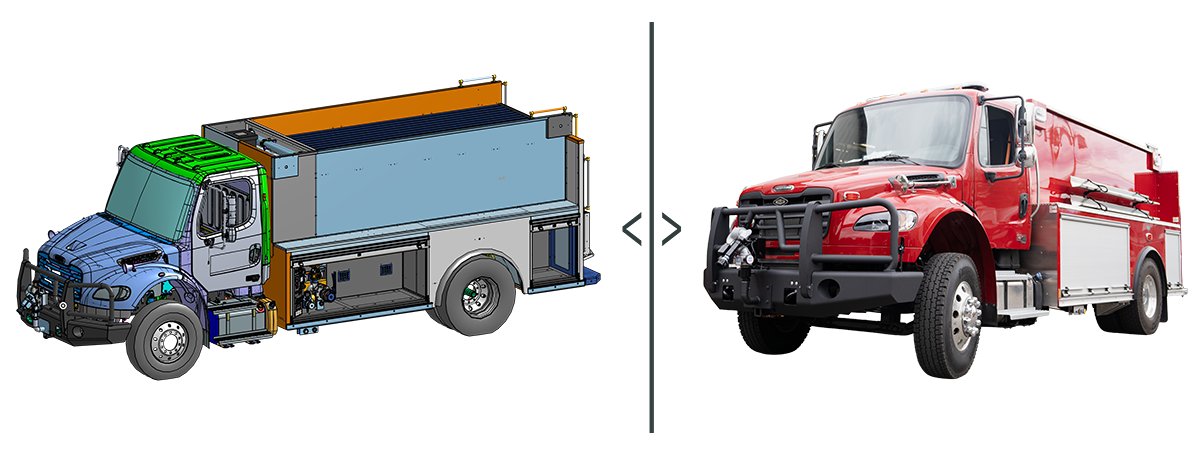

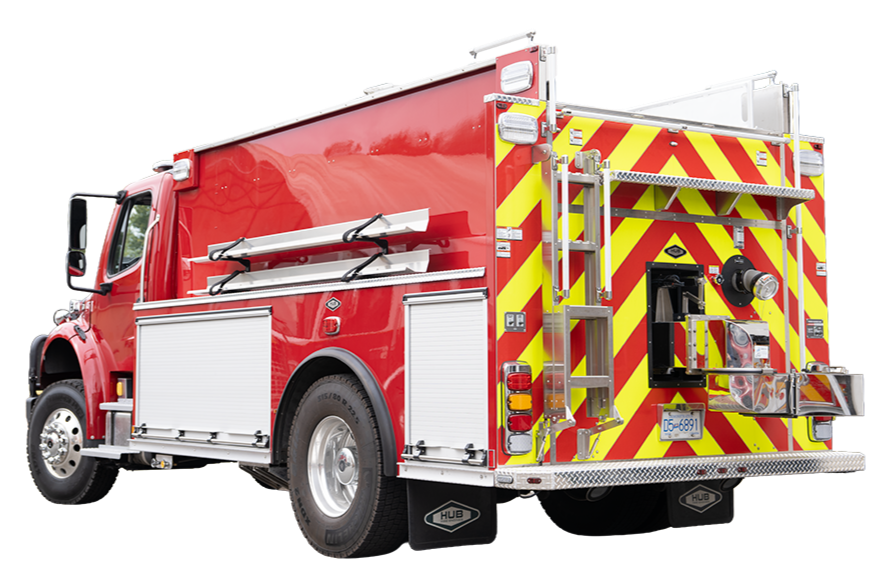
MODUS Tanker (Tender) drawings and final product
Before a tanker is a tanker, it is a drawing. Lines on a screen showing where a tank sits, how a compartment door swings, which side the dump valve goes on. Everything that will later be aluminum and steel and 1,700 Imperial Gallons of water exists first as geometry, and somebody in Abbotsford has to get that right.
This is the story of a MODUS Tanker (Tender) — the one currently weeks away from completion on our floor. It moved through four teams to get there, and more hands than we can fit in one article. Here is what each team did.
01 Design
Turns a concept into ready-to-build drawings.
02 Purchasing
Orders every part on those drawings and has it on the shelf before the floor needs it.
03 Plastics
Cuts and welds the water tank right here in our own plastics bay.
04 Production
Builds the truck from the drawings and the parts, one stage at a time.

01 The Drawings
Trevor turns a concept into an engineered reality. Gabe pre-works the electrical system.
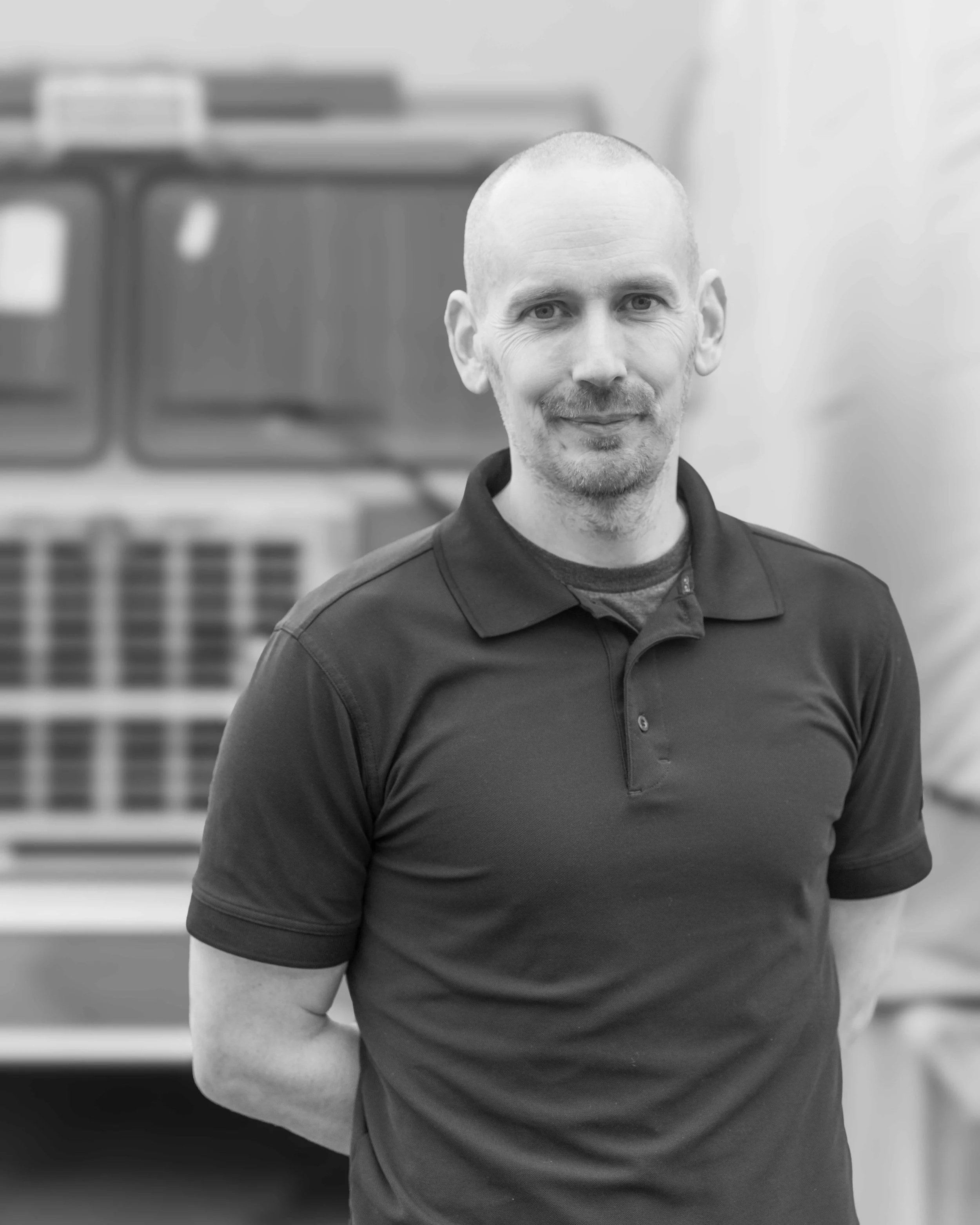
Our design team turns an idea into a truck that can be built. On this tanker, that work began with Trevor. He designs it in CAD. Every part is modelled. Every dimension is set. Every system gets checked against the ones beside it.
A lot of that work is fitting things in. A fire truck is a small building with a drivetrain under it, and every inch is already claimed. Plumbing has to reach the pump without crossing an electrical run. A discharge has to sit where a firefighter can reach it with gloves on, in the dark. On a tanker, weight decides the rest. 1,7000 Imperial Gallons of water is 17,000 pounds, and it moves when the truck moves. So tank shape and mounting height get worked out against axle loading and centre of gravity before anyone cuts a panel. Under MODUS the team is not starting from scratch. They are configuring modules Hub has built before. What comes out is a full set of drawings, ready to build.
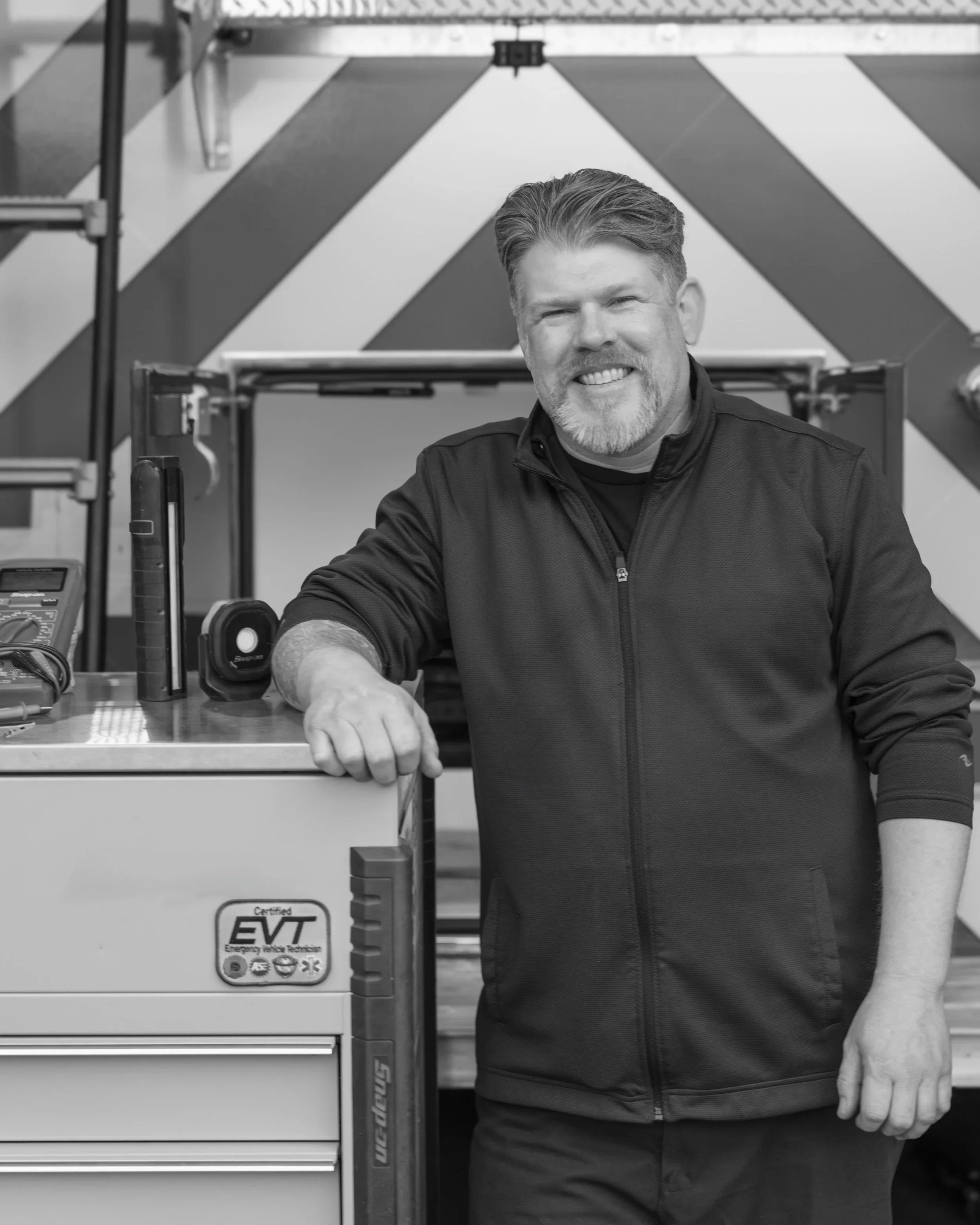
Gabe designs nearly all of the electrical on a Hub truck. The system and the harnesses both. He then works out how all of it connects and builds the harnesses that carry it, so the wiring on this tanker is not figured out on the floor. It is designed, labelled and repeatable. Ten years from now, when something needs tracing, there is a drawing for it.
Gabe then makes the truck light up. He programs it, setting the flash patterns the truck will run for the rest of its service life. That work matters more than it sounds. Scene lighting is what makes a crew visible to traffic at two in the morning, and what keeps a highway closure from turning into a second incident. Day or night, the pattern has to read from a distance and it has to be right.
Design also answers the question departments care about most. How long? The labour for each stage gets worked out, hours get put against it, and that becomes the production schedule. The schedule becomes the delivery date.
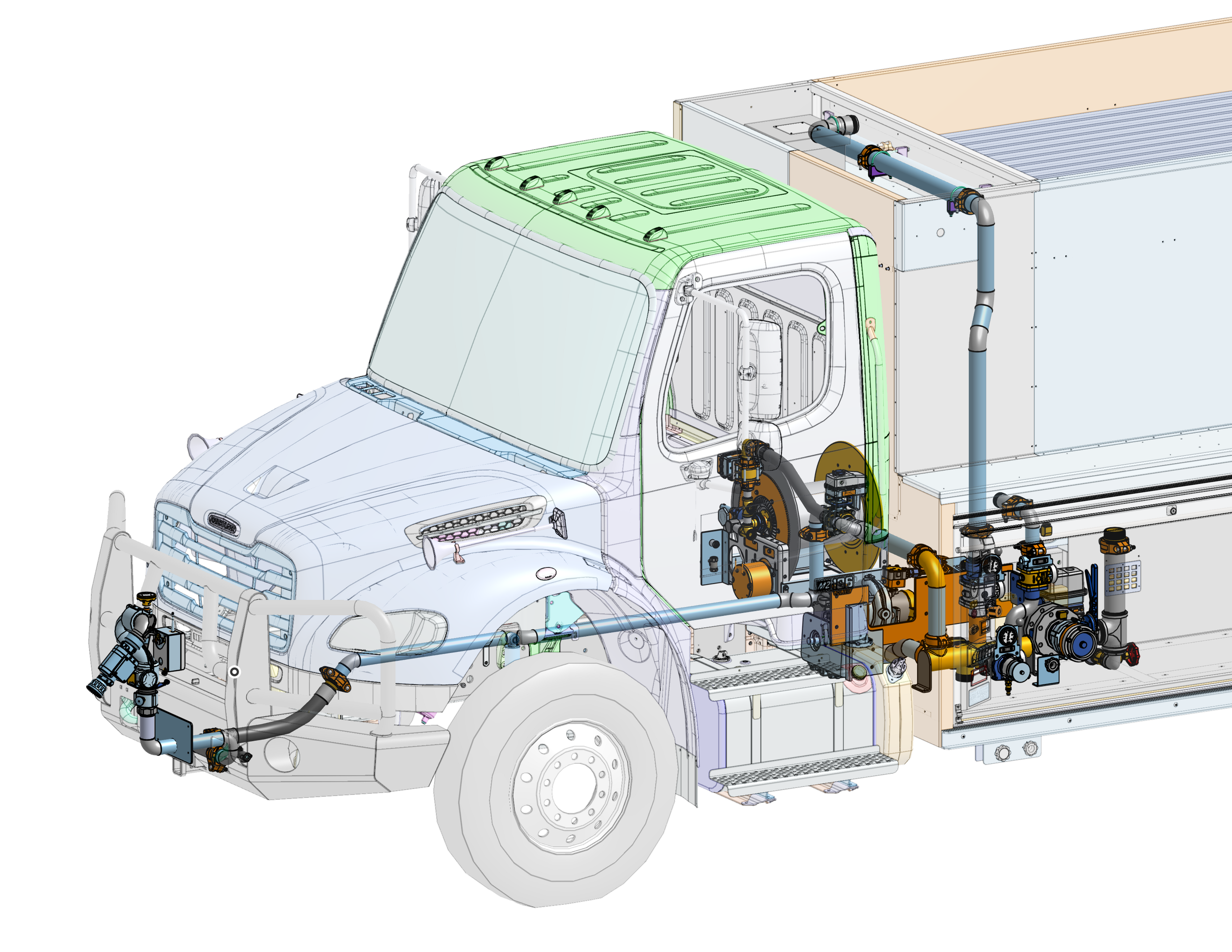
CAD Drawings of MODUS Tanker (Tender)
02 The Parts
Nick & Kelsey get the right parts on the shelf for when we need them.
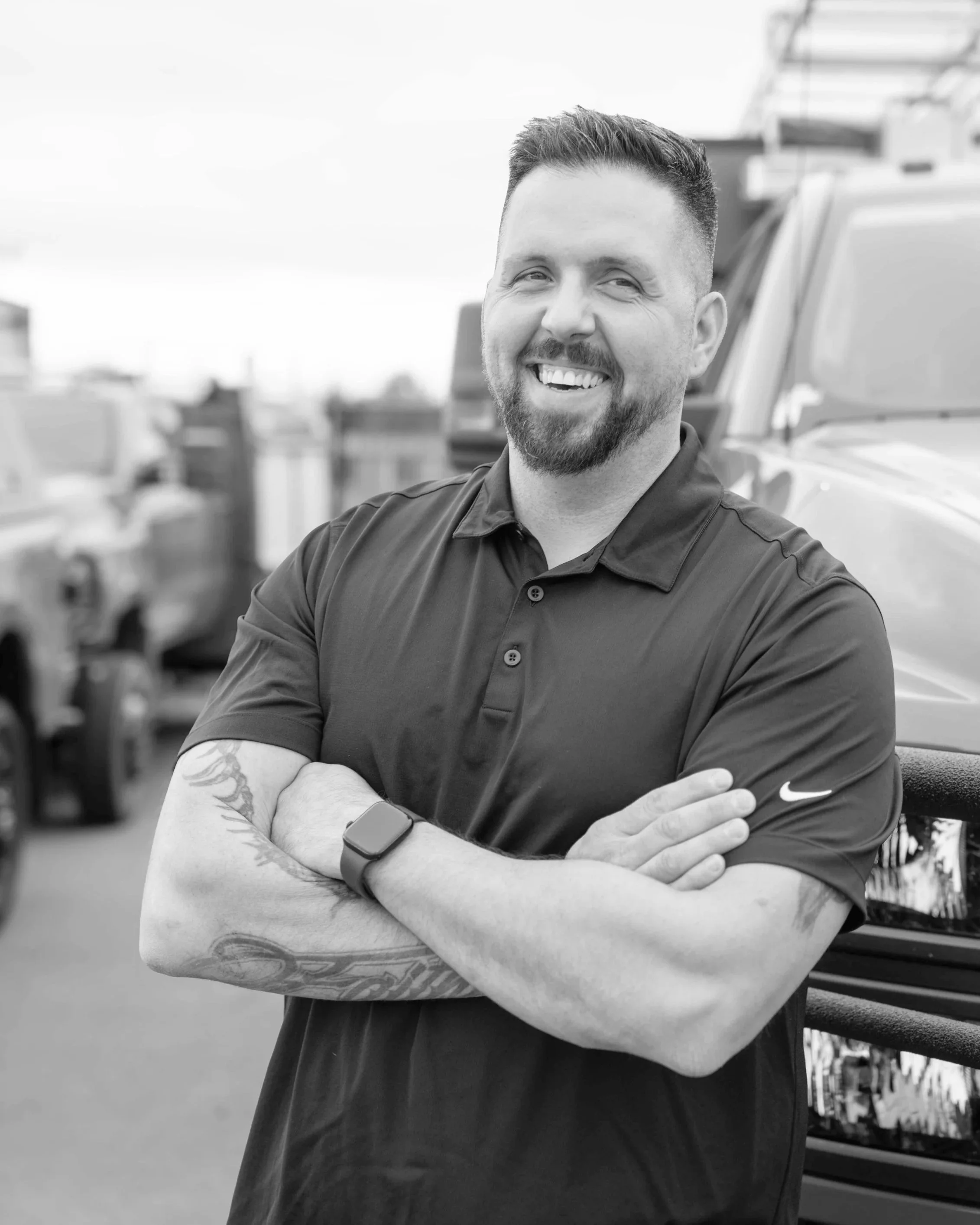
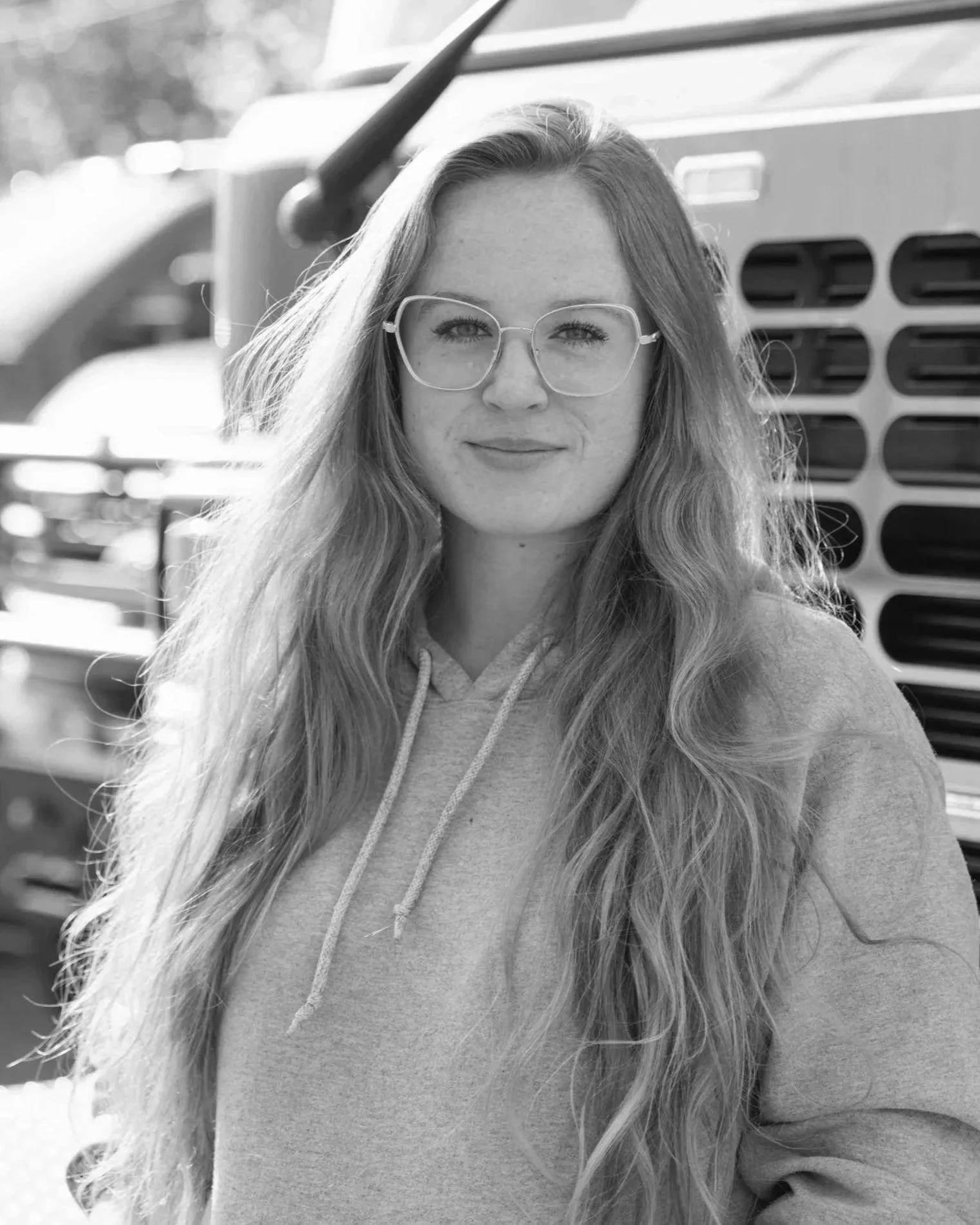
A drawing is only worth what is on the shelf and a pallet. Nick and Kelsey order every part on Trevor's drawing. Valves, fittings, lights, wiring, the pump, the chassis, and a few thousand smaller things. Their job is to have all of it in the building before our production team needs it.
It is the job nobody sees, and it decides whether a completion date is realistic. One missing fitting does not cost you the time it takes to order a fitting. It costs you the whole stage, because that stage is booked. Everything behind it moves too.
This is also the honest part of the story. Most of the components on any fire truck come from a handful of specialist manufacturers, and most of those have lead times. Lead times that Nick and Kelsey have to make work.
What they control is timing. That is why this truck exists. They ordered the parts for this tanker before anyone had bought it. We built it so a department calling in September finds a finished truck instead of a spot in line. This tanker can be in service in a matter weeks, not years.
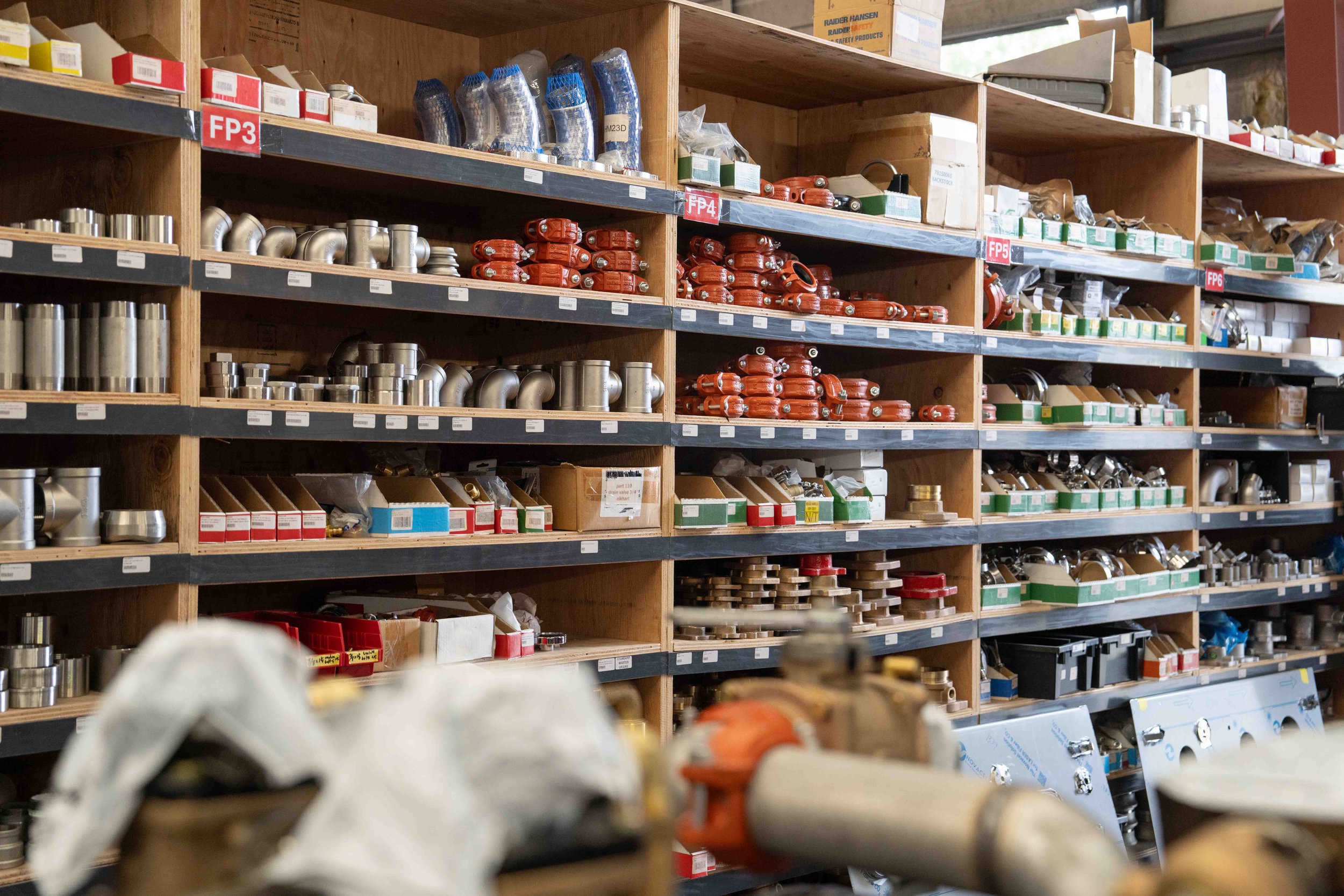
A parts inventory shelf on the Hub production floor
03 The Tank
Jeff & Josh build a tank to spec on location.
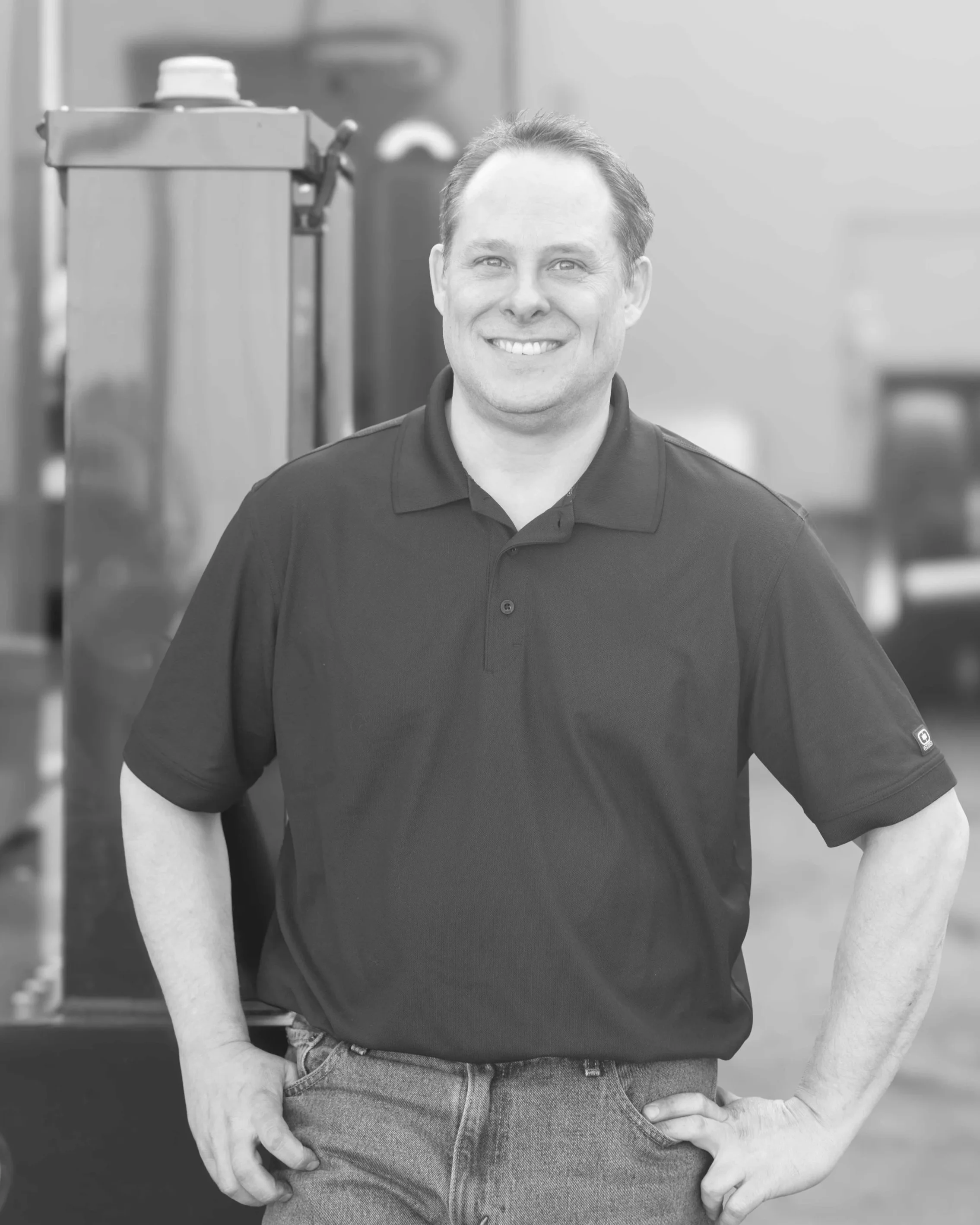
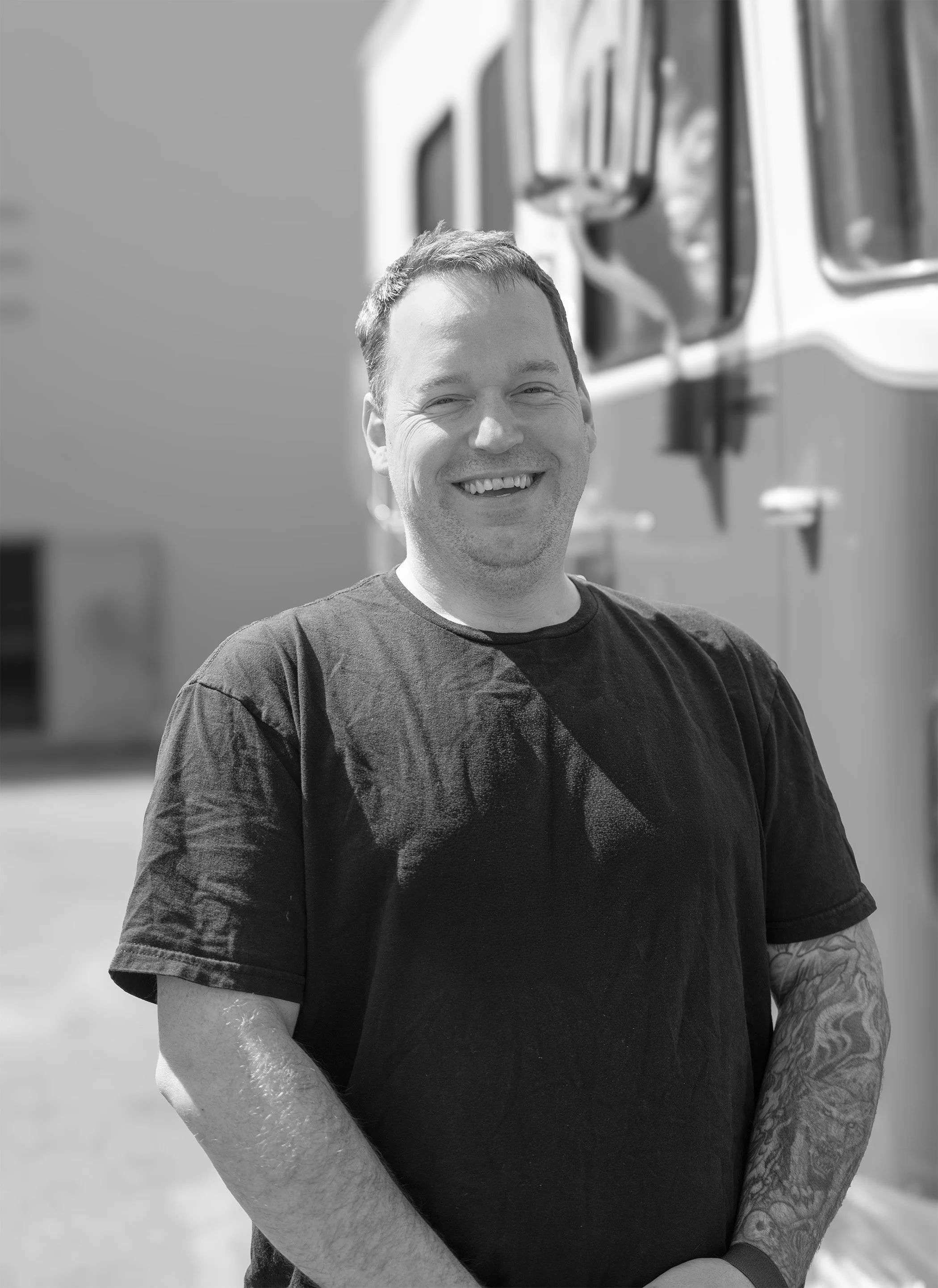
The tank is one of the biggest pieces on a tanker, and we make ours here in Abbotsford, BC. Jeff and Josh build it in our plastics bay across the parking lot from the production line.
A CNC machine cuts the panels to the dimensions on Trevor's drawing. Our plastics team welds them into a tank. Nothing gets shipped in and there’s no waiting.
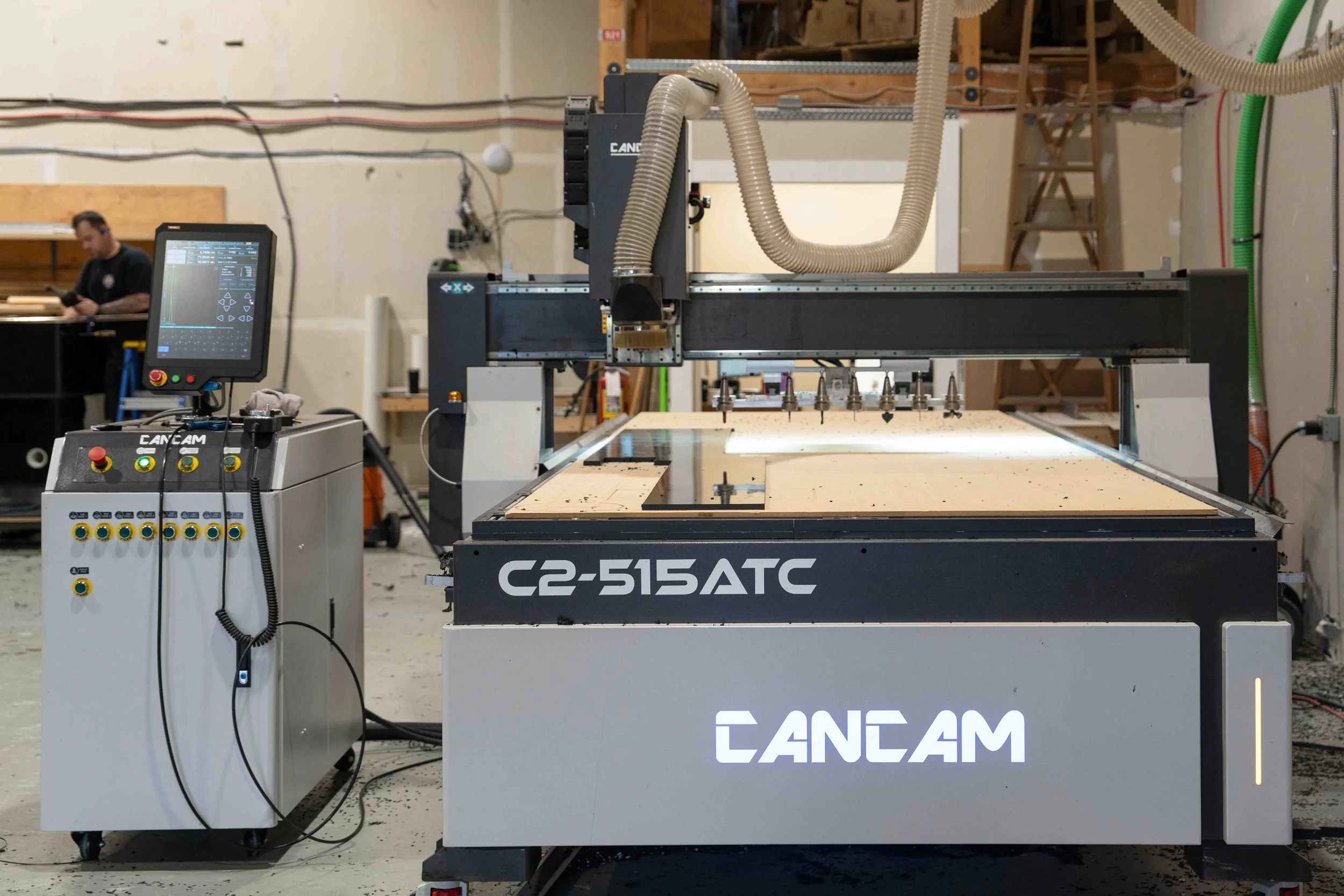
In house CNC machine
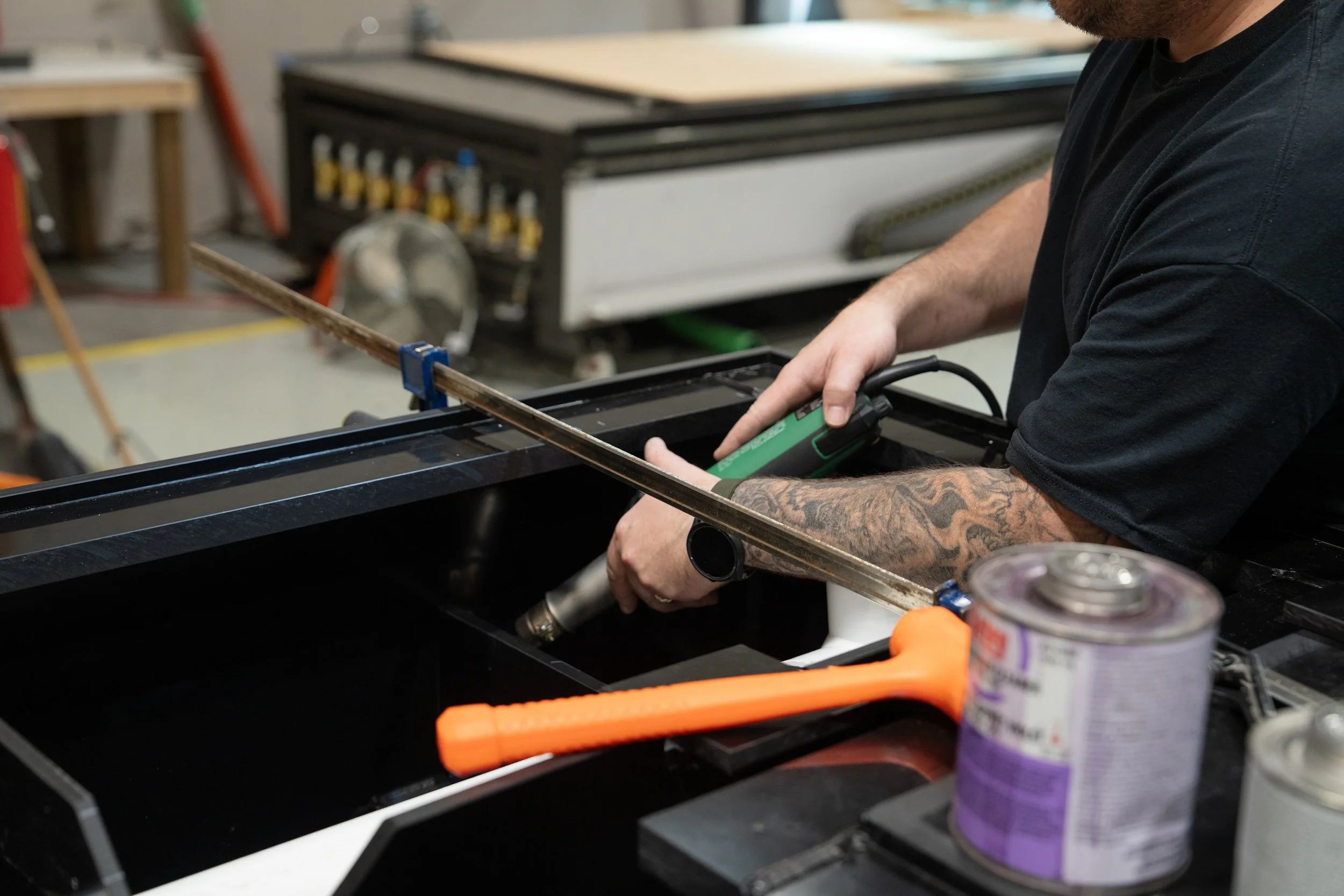
Tank assembly
04 Production
Kurt & Dan put all the pieces together.
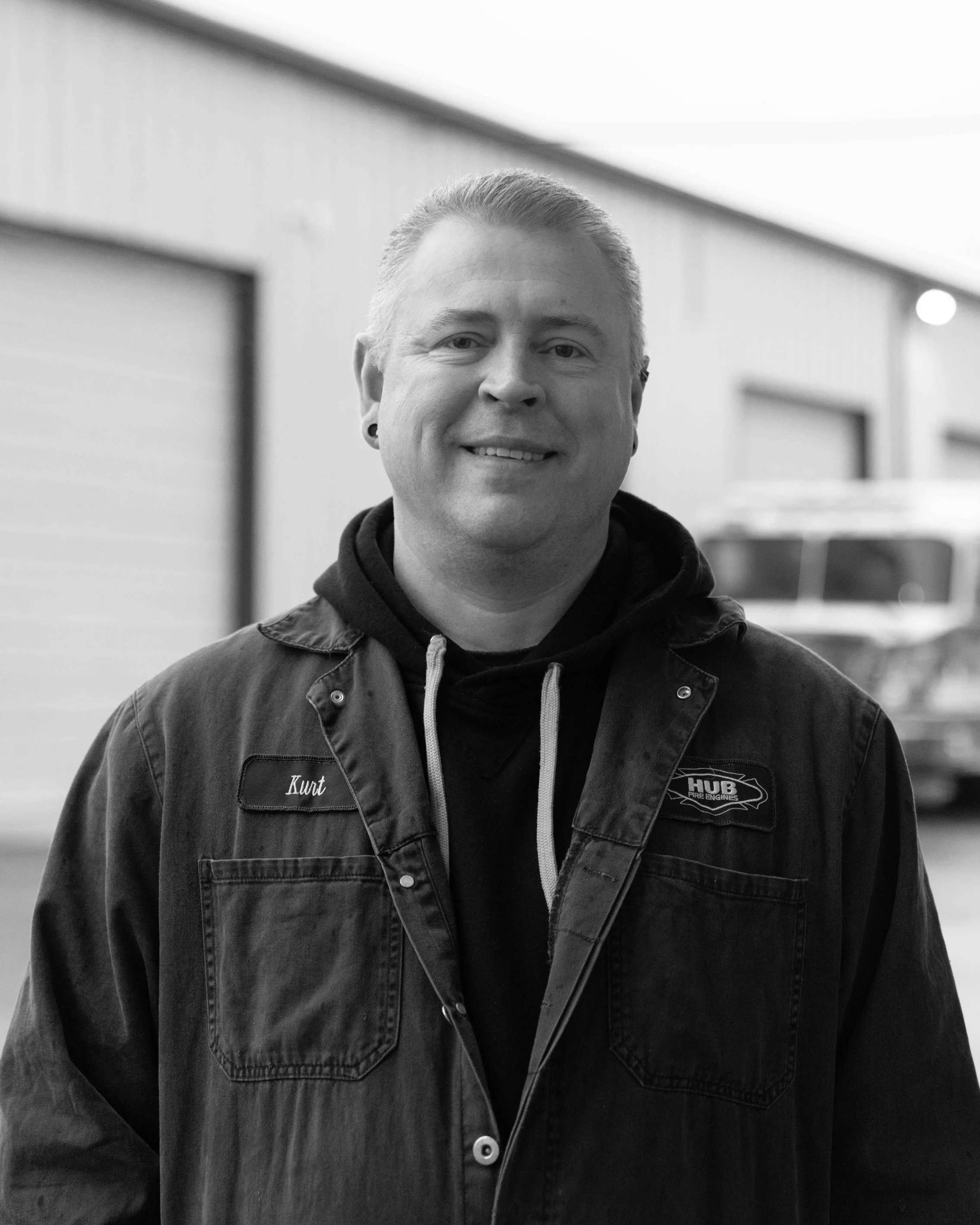
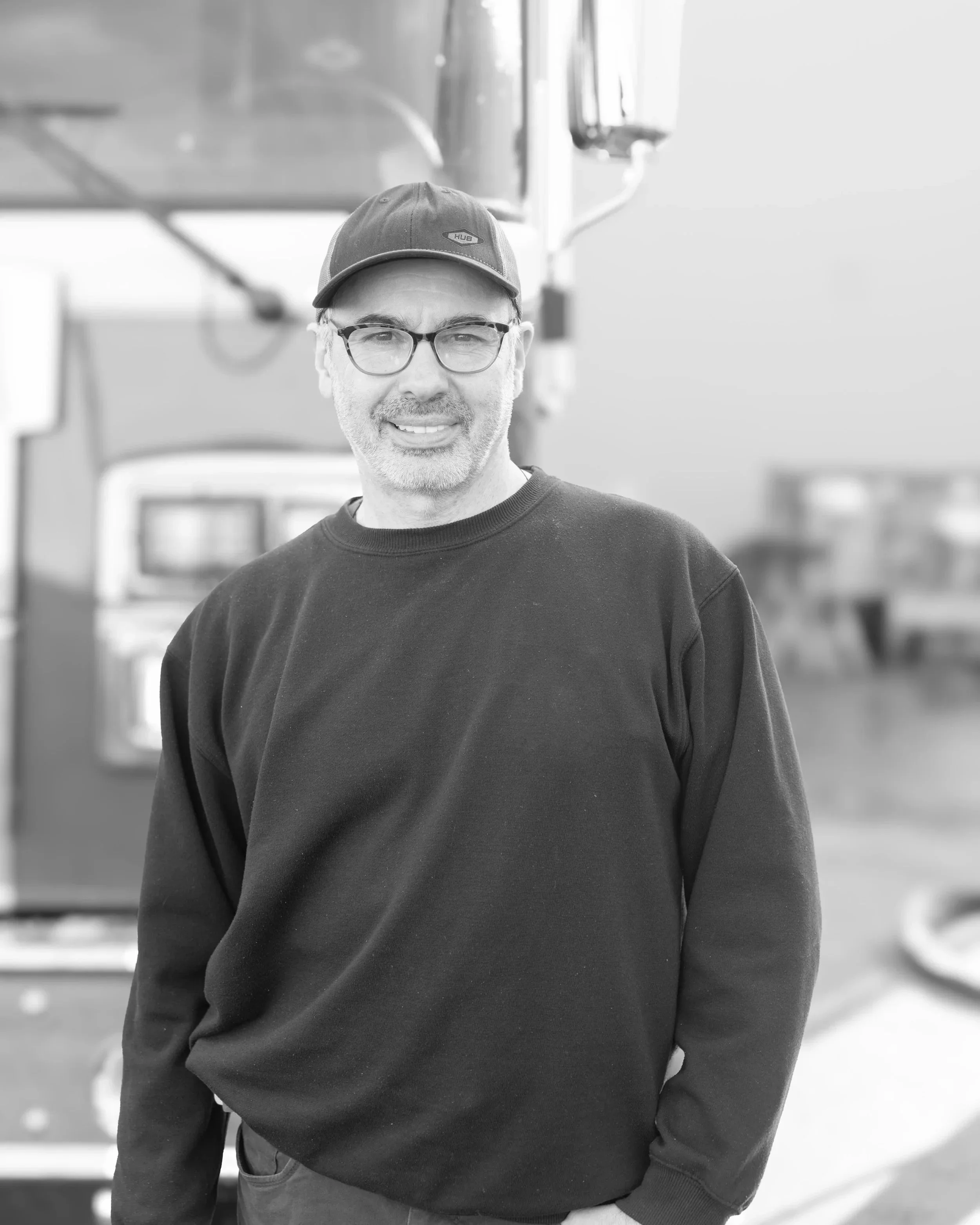
Production builds the truck. Dan runs the floor, keeps the stages moving in order, and backs the crew up when a build needs a decision.
Kurt assembles it. He works off Trevor's drawings and the parts Nick and Kelsey have staged, and he puts the truck together piece by piece. Walk through the bay on any given day and you will find him on a different section. Compartments one week. Hardware, hinges, latches, and the hundred fittings that hold a truck together.
This is where modular building shows itself. Every module is made to known dimensions, so the pieces fit the first time. A bit like Lego, only heavier. The tank from plastics meets a body built off the same drawing. That is MODUS. It is how these trucks go together faster without taking anything out of them.
A truck this size takes more hands than one article can hold. Fabrication, plumbing, paint, finishing and the rest of the crew all put work into this tanker.
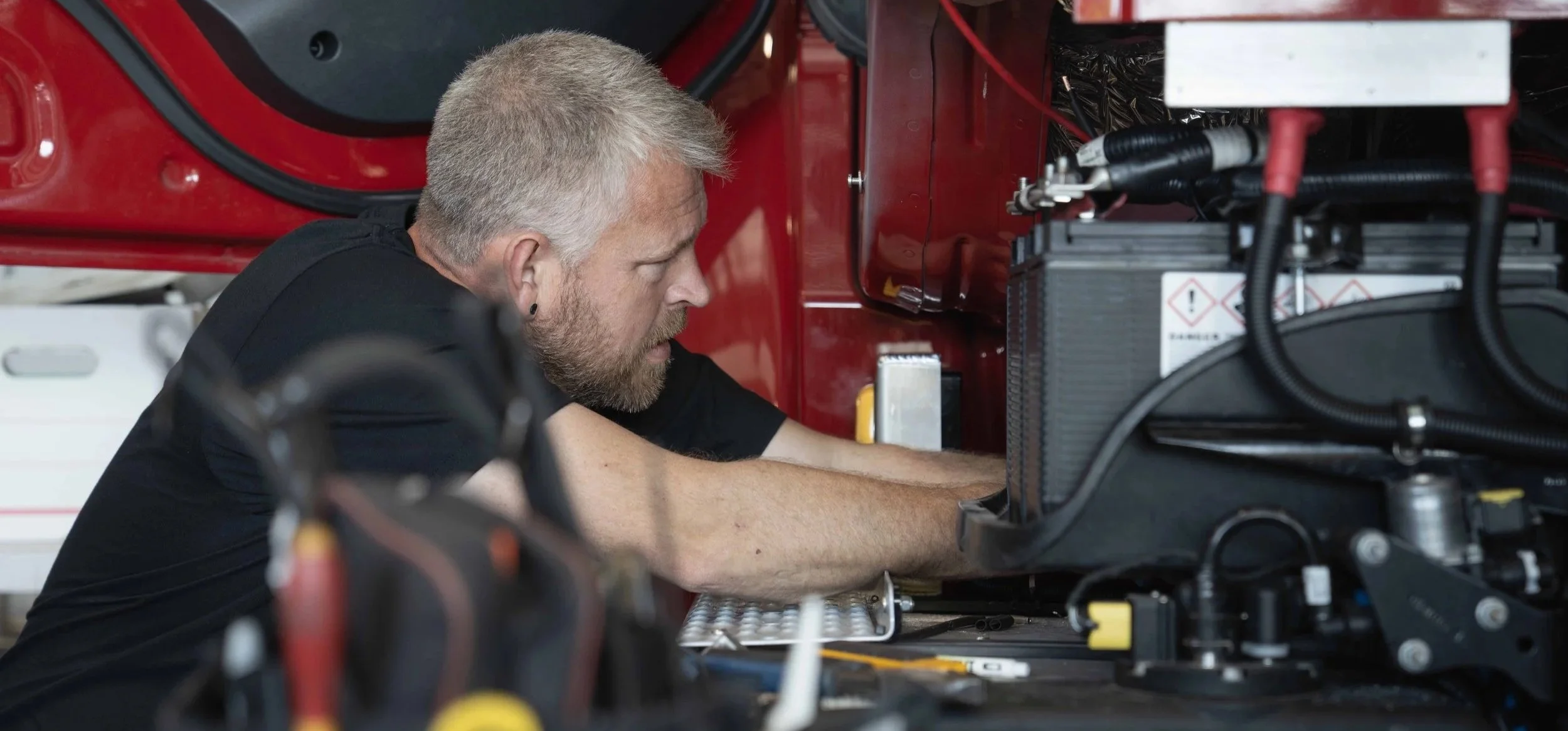
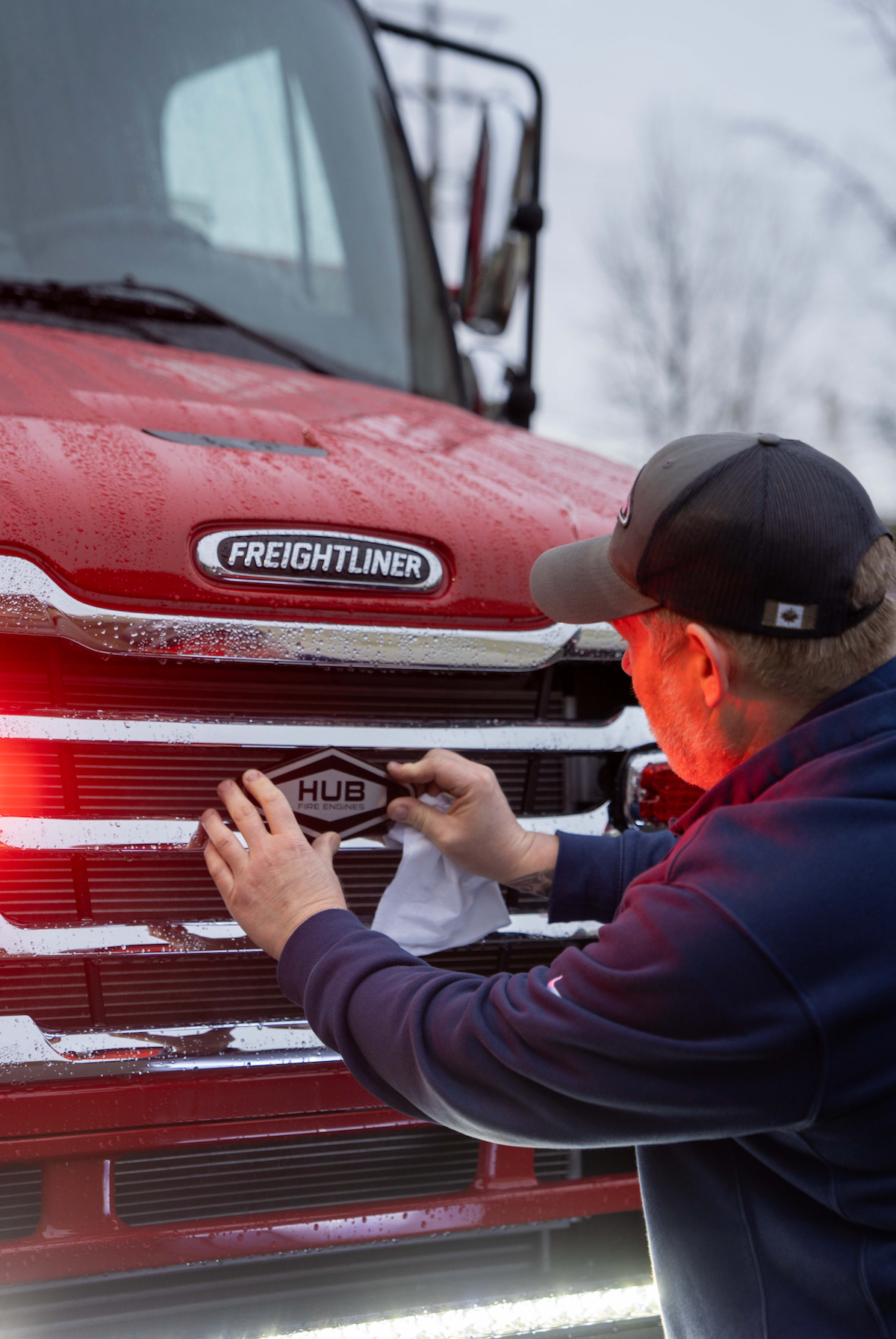
MODUS Tanker (Tender) production behind the scenes.
One Ready Now
The tanker that this team built is just weeks away from being ready for a community to serve.
Across Canada, departments are waiting years for a new truck. This one is built, inspected and ready to deliver now. Hub is also an awarded supplier on the Canoe Procurement Group of Canada Firefighting Apparatus Program, so you can procure it through a cooperative contract for faster acquisition.
If your department has a tanker in the replacement plan, we invite you to come and see it.
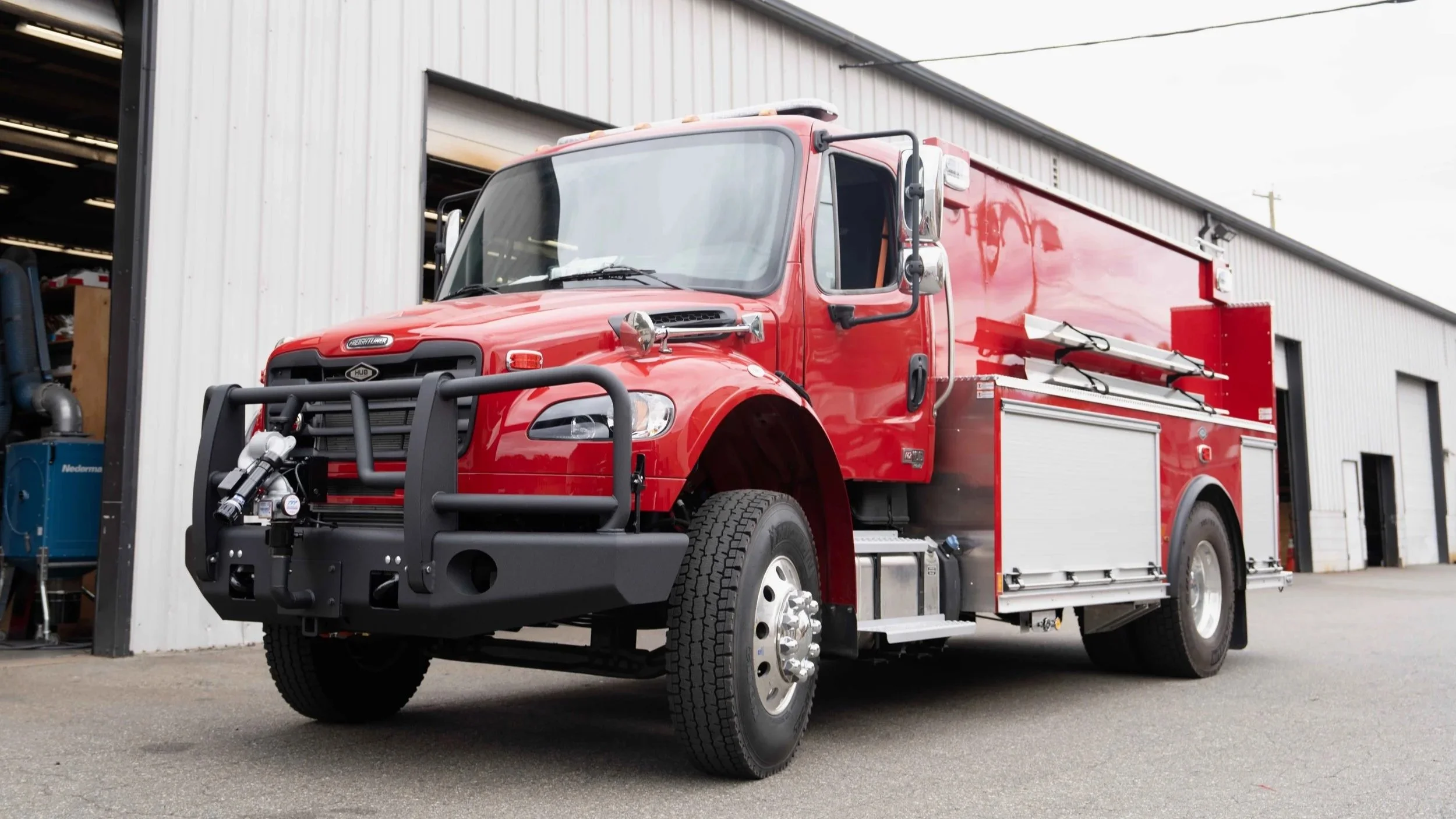
Assembled in Abbotsford, British Columbia. Available for immediate delivery anywhere in Canada.

Available through Sourcewell Contract #082025-HUB
Building Quality. Driving Trust. Since 1959.
Hub Fire Engines